


- ▶ What drives the installed cost of a 1200 kW silent generator set?
- ▶ When a 1200 kW silent generator set suits hospital backup power
- ▶ Can a 1200 kW silent generator set meet urban boundary noise limits?
- ▶ Overseas Clients Visit Ameco for On-site Inspection, Deeply Empowering Global Green Energy Cooperation
What Is Shaping Demand for Gas Generator Sets in 2026 Energy Projects
What Buyers Are Really Watching in 2026 Gas Power Projects
As 2026 energy projects move toward lower emissions, flexible deployment, and stronger cost control, demand for Gas Generator Sets is being shaped by both policy and project economics. For business evaluators, the shift is no longer about whether gas-based generation has a place, but where it fits best when grid reliability, fuel availability, permitting pressure, and lifecycle cost are all moving at once.
The strongest signal is that buyers are becoming more selective about use cases. Gas sets are gaining attention in oilfields, industrial parks, distributed energy stations, and waste-to-energy applications where power quality matters and where liquid fuels are either costly, harder to permit, or exposed to logistics risk. That does not mean every project is moving toward gas. It means projects with an on-site or nearby fuel source, tighter emissions expectations, or variable operating profiles are being screened differently than they were a few years ago.
This is especially visible in markets where natural gas, associated petroleum gas, biogas, or flare gas can be monetized instead of vented or left underused. In those settings, procurement teams are not comparing one generator against another in isolation. They are comparing a broader power architecture: fuel treatment, control response, emissions profile, maintenance intervals, remote monitoring, and the financial value of using gas that would otherwise be wasted.
Emissions Pressure Is Narrowing the Shortlist
A clear 2026 trend is that compliance risk is starting to shape equipment demand earlier in the project cycle. In many regions, project developers now have to think beyond capex and rated output. They need to anticipate local air-quality rules, methane management expectations, and internal ESG reporting standards, even when regulations differ sharply by country. That favors Gas Generator Sets in applications where cleaner combustion relative to conventional diesel helps move a project through internal and external review.
Still, the market is not rewarding generic “low-emission” claims. Buyers are asking harder questions about real operating conditions: how the unit handles fluctuating gas composition, whether the control system can maintain stable output under changing loads, and what derating or additional treatment may be required. This is one reason technical due diligence is getting deeper. A machine that performs well on stable pipeline gas may not behave the same way on biogas or oilfield gas with variable quality.
Manufacturers with experience in gas control technology and testing are better positioned here because the discussion has moved closer to application engineering. AMICO, for example, operates in both equipment manufacturing and oilfield services, which reflects where the market is going: buyers increasingly want suppliers who understand not just the generator itself, but the field conditions around it.
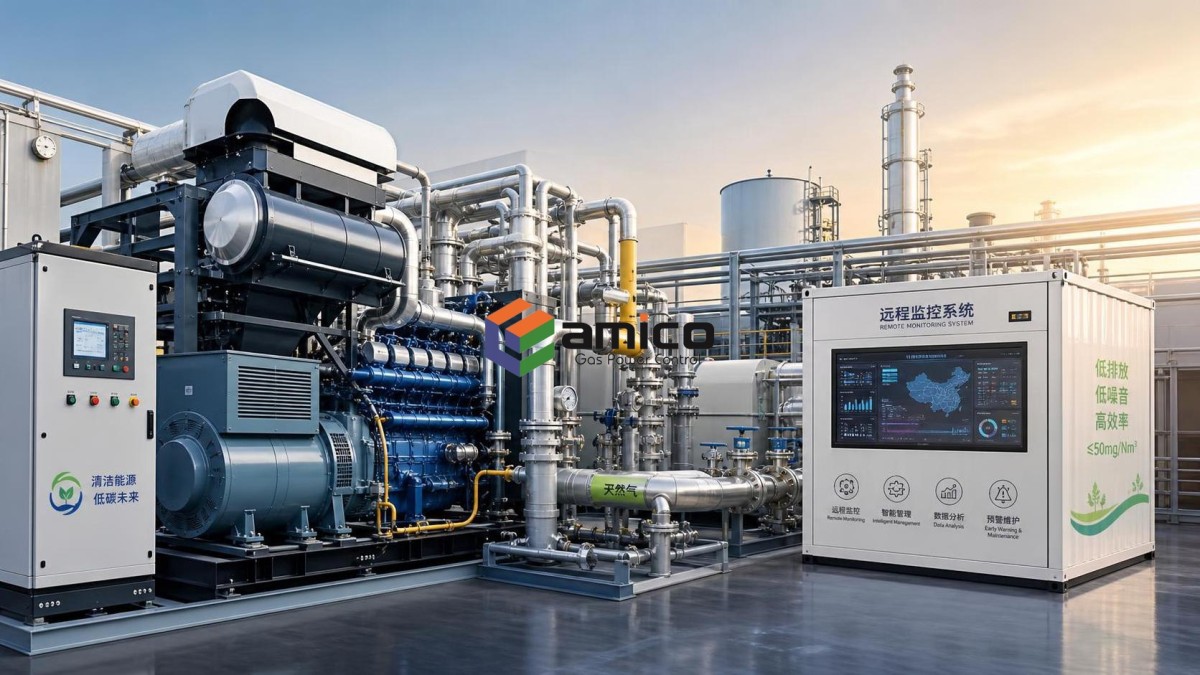
Fuel Flexibility Has Become a Commercial Question, Not Just a Technical One
One underappreciated change is how often fuel flexibility is now tied directly to project finance. In 2026, developers evaluating distributed generation are less interested in headline power alone than in the ability to turn irregular gas resources into predictable electricity revenue. That is why biogas, landfill gas, and associated gas projects continue to attract attention, even when development timelines are longer or site conditions are less standardized.
For smaller or mid-scale projects, this has made specialized units more relevant than large centralized systems. A practical example is the 160kW biogas generator, model AMC160GFJ-PZ, rated at 160kW (200kVA) and 400V, designed to generate electricity from biogas. Equipment in this range fits a market segment that is easy to overlook: sites where the goal is not maximum scale, but stable conversion of available gas into usable power with manageable investment and operating complexity.
That matters because many 2026 projects are being approved in stages. Developers may start with a modest distributed asset, prove fuel consistency and uptime, then expand later. This staged approach tends to favor equipment choices that are modular, monitorable, and easier to integrate into broader energy management systems.
The Buying Criteria Are Moving Beyond Nameplate Specifications
Procurement teams used to filter options quickly by power rating, delivery time, and basic fuel type. That is no longer enough. The current market puts more weight on three issues that can materially affect returns:
- control performance under variable gas quality or variable load;
- service support close to the project site, especially for oilfield and remote industrial use;
- data visibility, including remote diagnostics and operational reporting.
This shift reflects operational reality. A generator that looks efficient on paper can become expensive if it trips frequently, requires specialized intervention for fuel fluctuations, or cannot integrate into the owner’s supervisory platform. Smart energy management is therefore no longer an optional layer added after commissioning. In many tenders, it is becoming part of the core value proposition.
That direction also aligns with the broader industrial push toward distributed, digitally monitored assets. Companies evaluating Gas Generator Sets are increasingly asking how an asset behaves across its operating life, not just how it performs on day one.
Oilfield and Off-Grid Demand Remains Distinct
It would be a mistake to treat all gas-power demand as one market. Oilfield projects and off-grid industrial sites have different decision logic than urban distributed energy projects. In oilfields, power generation is often linked to site continuity, gas utilization, and harsh operating conditions. Reliability and field service depth can outweigh incremental efficiency gains. In industrial parks or commercial distributed energy systems, noise limits, emissions acceptance, load-following ability, and integration with existing electrical infrastructure tend to carry more weight.
This is where supplier background starts to matter. A company with direct exposure to gas power controls, generation equipment, distributed power applications, and oilfield engineering can usually identify project risks earlier. That does not eliminate uncertainty, but it reduces the odds of treating a site-specific fuel or controls issue as a standard package sale.
What to Watch in the Next 12 Months
Several signals will be worth tracking as 2026 projects move from evaluation to award. One is whether more tenders specify performance expectations around fuel adaptability and remote controls rather than only rated output. Another is whether biogas and associated-gas projects continue to progress despite financing caution in broader energy infrastructure. A third is how local permitting practices evolve, because delays there can quickly reshape the economics of one generation option versus another.
The demand outlook for Gas Generator Sets is therefore not a simple growth story. It is a sorting process. Projects with accessible gas resources, tighter emissions scrutiny, and a need for resilient distributed power are likely to keep moving toward gas-based solutions. Projects without dependable fuel supply or without the operational discipline to manage gas quality may hold back or choose simpler alternatives.
For evaluators, the practical question in 2026 is less about whether gas generation is “the future” and more about whether a given site can convert fuel availability, control stability, and service capability into a durable business case. That is where the real market separation is happening.

Contact Us
Please use the form below to contact us.
If you require a response, we will contact you as soon as possible.