


Single-Stage vs Two-Stage Pressure Regulator for Generator Fuel Gas
What the choice really changes in a generator gas train
In generator fuel gas systems, the question is not whether a pressure regulator reduces pressure. That part is obvious. The real selection issue is how much inlet variation the regulator must absorb, how stable the engine’s downstream demand is, and how much pressure accuracy the project needs during load changes, ambient swings, and upstream supply fluctuation. That is where single-stage and two-stage designs stop being interchangeable.
A single-stage pressure regulator drops gas pressure from inlet to required outlet pressure in one step. A two-stage arrangement divides that reduction into two controlled steps, either within one integrated body or across two regulators in series. On paper, both can deliver the same nominal outlet value. In operation, they behave differently when inlet pressure moves, when generator load ramps quickly, or when the available gas source is less consistent than the original design assumed.
For power generation projects, that difference matters because gas engines do not respond well to unstable fuel conditions. Pressure that drifts too far from the engine’s required range can affect air-fuel ratio control, combustion stability, emissions tuning, and in some cases start reliability or trip frequency. Project teams usually discover this late, after commissioning delays or repeated nuisance shutdowns, when the regulator has already been treated as a minor accessory.
Where single-stage works well, and where it starts to struggle
A single-stage regulator is often a sensible choice when the inlet gas pressure is already fairly close to the target operating range and does not move much over time. That can be true in smaller packaged systems, stable pipeline-fed sites, or applications where the generator set has moderate tolerance and the control strategy is not especially sensitive. The appeal is straightforward: fewer components, simpler piping, easier maintenance, and usually lower initial cost.
The limitation appears when one regulator is asked to manage a large pressure drop while also keeping outlet pressure tight during changing flow demand. In those cases, droop becomes more noticeable. Lock-up characteristics also matter. If the engine suddenly reduces fuel demand, the downstream pressure may overshoot before the regulator settles. Some systems can tolerate that. Others cannot, especially lean-burn engines or installations where gas quality and pressure both vary.
This is one of the common misunderstandings in project selection: choosing by pipe size or nameplate flow only. A regulator can appear correctly sized on maximum capacity and still perform poorly because the pressure control band is too loose for the generator’s actual operating profile.
Why two-stage is often chosen for demanding generator duty
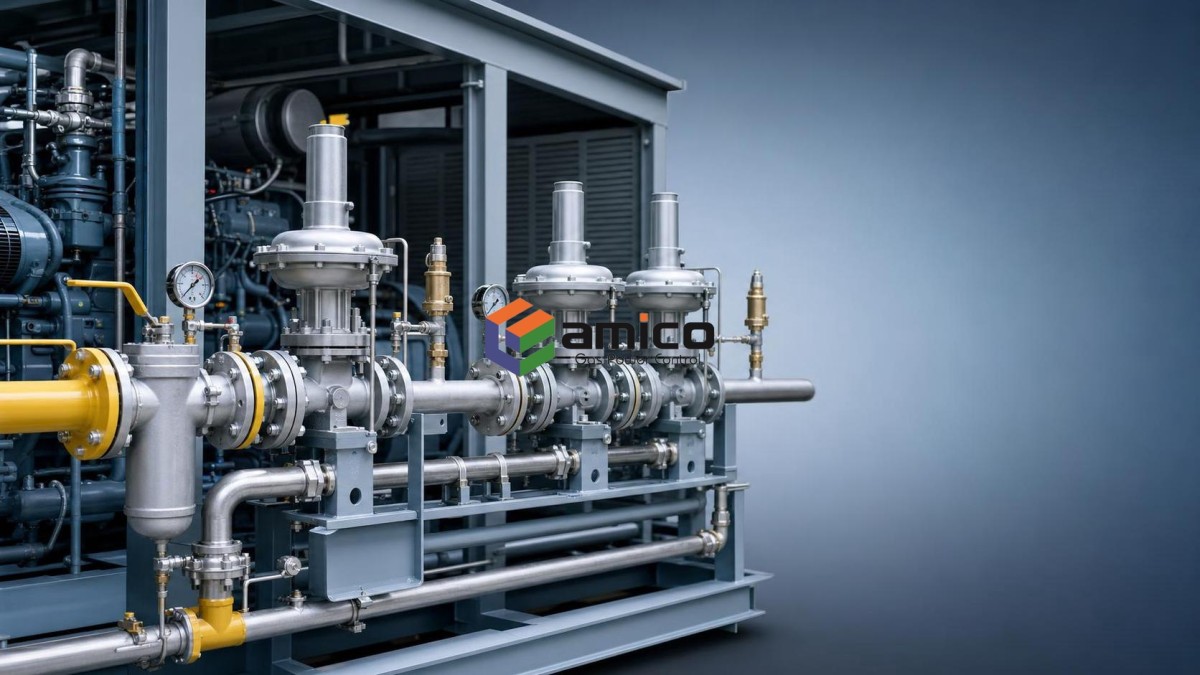
Two-stage pressure regulation is usually preferred when the upstream pressure is high, variable, or both. By splitting the reduction, the first stage handles the larger disturbance and the second stage refines the outlet pressure delivered to the engine. The result is typically better control stability, less sensitivity to supply-side swings, and smoother response during startup and load transitions.
That does not mean two-stage is automatically “better” in every project. It means it offers more control margin where conditions justify it. If a site receives gas from a source with seasonal pressure changes, mixed network behavior, or intermittent field conditions, the second stage often protects the engine from those variations more effectively than a single regulator can. For integrated energy equipment suppliers and field service teams, this is a practical design issue rather than a theoretical one: unstable fuel conditioning tends to show up as repeated operating symptoms elsewhere in the package.
In CHP systems, the case for tighter regulation can be even stronger. These units are usually selected for high availability and steady thermal recovery, so small fuel-side disturbances can have broader operational impact. In commercial and industrial applications using 18-150kW Natural Gas CHP Generators, the regulator decision is tied not only to engine performance but also to how consistently the plant can deliver useful electrical and thermal output.
A practical selection lens
For project managers, the cleaner way to evaluate the regulator type is to ask a short set of engineering questions early:
- How wide is the actual inlet pressure range, not just the nominal supply pressure?
- What outlet pressure tolerance does the engine fuel system require during startup, full load, and transient load change?
- How much pressure drop occurs across filters, shutoff valves, and safety devices as they age or foul?
- Is gas composition stable, or will changes in heating value and density affect flow behavior?
- What is the consequence of a pressure excursion: minor tuning drift, lost output, or a generator trip?
Once those questions are answered, the regulator type usually becomes clearer. If the system has narrow pressure variation, modest control demands, and straightforward maintenance access, single-stage may be adequate. If the project has uncertain gas conditions, stricter engine requirements, or higher downtime cost, two-stage often earns its extra complexity.
What should not be ignored in the review process
Regulator selection should not be separated from the rest of the gas train. Filter sizing, slam-shut or overpressure protection, valve Cv, pressure sensing line arrangement, and downstream control logic all affect real performance. A well-chosen pressure regulator can still disappoint if the installation introduces unnecessary pressure loss or signal instability.
Another point that gets overlooked is turndown. Generators rarely operate at one fixed load all day. If the regulator behaves well at rated flow but becomes unstable at low demand, operators may face trouble during part-load operation or synchronization events. That is why experienced teams review minimum and maximum flow behavior instead of relying only on headline capacity.
At AMICO, where gas power control technology, generator manufacturing, and oilfield service work intersect, this system-level view is especially relevant. A company building gas engines and generation equipment while also dealing with field gas conditions tends to see the same lesson repeatedly: fuel control hardware should be selected around the actual operating envelope, not around a simplified design point.
The decision most teams end up making
If the project is relatively small, the gas source is stable, and the engine maker’s pressure tolerance is forgiving, a single-stage pressure regulator can be a clean and economical answer. If the project carries tighter reliability expectations, larger upstream fluctuation, or CHP duty where stable output matters day after day, two-stage regulation is often the more defensible choice.
The useful rule is not “buy the more complex option.” It is “match the regulator architecture to the volatility of the gas source and the sensitivity of the generator.” Teams that do that early usually avoid the expensive version of this lesson during commissioning. For distributed energy packages such as 18-150kW Natural Gas CHP Generators, that discipline tends to pay back through smoother startup, steadier operation, and fewer avoidable fuel-side troubleshooting cycles.

Contact Us
Please use the form below to contact us.
If you require a response, we will contact you as soon as possible.