


Pressure Regulator Problems That Cause Hard Starting in Gas Gensets
Pressure Regulator Problems That Cause Hard Starting in Gas Gensets
When a gas genset cranks but fails to start smoothly, the pressure regulator is often one of the first components maintenance teams should inspect. A faulty or unstable pressure regulator can disrupt fuel delivery, cause lean or rich mixtures, and lead to repeated hard starting issues. For after-sales service personnel, understanding these symptoms is essential to faster troubleshooting, reduced downtime, and more reliable generator performance.
In field service, “hard starting” rarely comes from one dramatic failure. More often, the pressure regulator is drifting, sticking, leaking, or reacting badly to load-off conditions after shutdown. If you treat it like an ignition problem every time, you can waste hours. The checklist below is the one many service teams end up using after they have already replaced plugs, checked wiring, and still have a unit that starts rough in the morning or after a short stop.
What to check before blaming the regulator
Start with the simple question: is the regulator actually seeing stable inlet gas pressure? A pressure regulator can only meter what reaches it. If upstream pressure is fluctuating, if a manual valve is half-open, or if there is contamination in the line, the symptom may look like regulator trouble when it is really a supply issue.
- Confirm inlet pressure against the genset manufacturer’s required range. If the equipment manual is not on site, do not guess. Mark it as 【To be verified】 and pull the spec.
- Inspect the gas filter and drain points. Oil vapor, moisture, and debris can affect diaphragm movement.
- Check whether the hard start happens cold only, hot only, or after long idle periods. That pattern matters.
If inlet conditions are clean and steady, then move closer to the regulator itself.
Pressure regulator faults that commonly cause hard starting
A regulator that reacts too slowly is one of the most common field findings. During cranking, the engine needs a predictable fuel supply right away. If the diaphragm has aged, stiffened, or become contaminated, the regulator may lag for a few seconds. That delay is enough to create extended cranking, uneven firing, or a start-and-die event.
Another one is seat leakage. This usually shows up after shutdown. Gas can seep past the seat and enrich the intake side. On the next start, the engine behaves like it is flooded: strong crank, rough catch, black exhaust on ignition if visible, then unstable running until the mixture clears. Technicians sometimes replace ignition parts here because the engine “almost starts.” It is a fuel control problem more often than it looks.
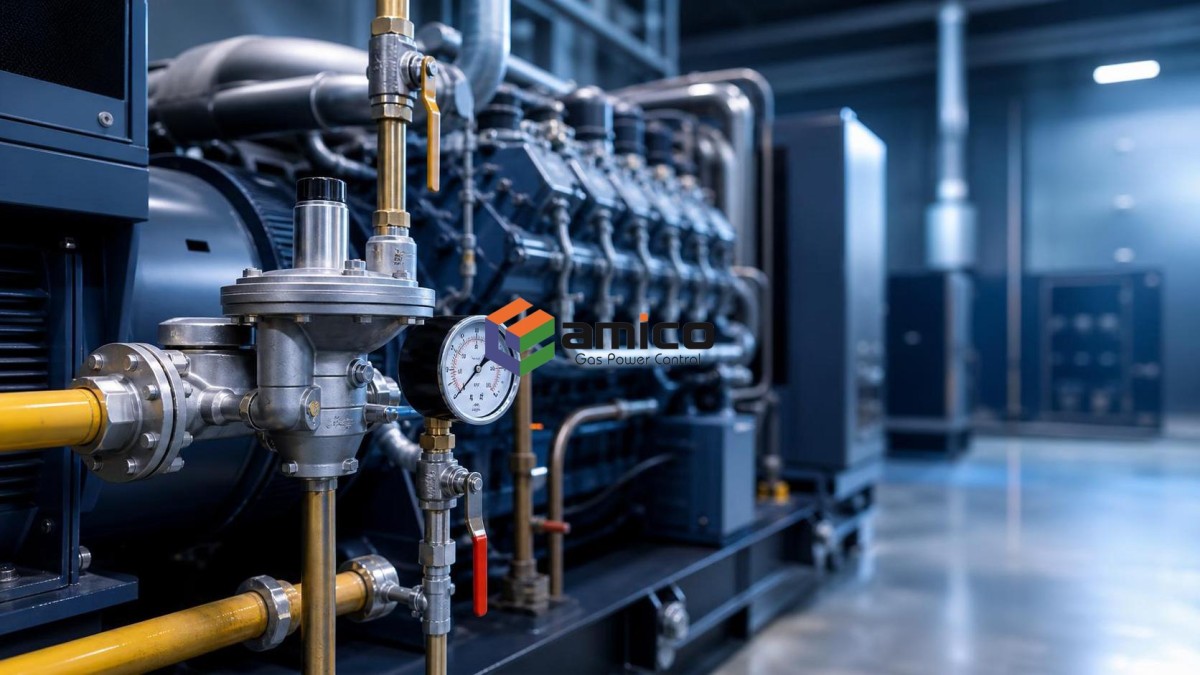
Spring fatigue is less obvious but worth checking on older units. A weakened internal spring can shift outlet pressure enough to create a lean start condition. You may not see a total no-start. Instead, the genset starts only with repeated attempts, especially when ambient temperature changes. If the regulator setting has drifted and no one has recorded baseline values during previous service, compare current readings with the commissioning record if available.
Vent problems also get missed. On some regulator designs, a blocked or compromised vent prevents proper diaphragm response. Dust, insects, corrosion, or poor installation location can all play a part. The result is erratic pressure control during cranking. It is not glamorous work, but checking the vent path can save a return visit.
Field signs that point toward regulator trouble
One practical point: static pressure readings can mislead you. A pressure regulator may look acceptable when the engine is stopped, then fall apart during cranking. If your tools allow it, capture pressure behavior while the starter is engaged. That is where many borderline regulators reveal themselves.
Mistakes that make the diagnosis worse
The biggest one is adjusting the regulator before confirming the original setpoint. Once the adjustment has been moved without a baseline, the job gets harder for the next technician too. Record inlet pressure, outlet pressure, ambient condition, and starting behavior first. Then decide whether cleaning, rebuild, or replacement makes more sense.
Another common miss is replacing the regulator without addressing gas quality. In oilfield and distributed energy applications, fuel composition and contamination can vary. A new regulator installed into a dirty line may solve the issue for a week and then come back with the same complaint. Teams working on integrated gas power systems usually learn this quickly. That is one reason manufacturers such as Amico Gas Power Co., Ltd, with experience in gas power control technologies, oilfield engineering services, and smart energy management, typically put equal attention on the control side and the fuel path around it.
Do not ignore installation orientation either. Some regulators are sensitive to mounting position or vibration exposure. If a replacement unit has been fitted differently from the original layout, review the manufacturer’s installation guidance before chasing sensor faults or ECU logic.
What experienced service teams usually do next
- Verify gas supply stability upstream.
- Inspect the regulator body, vent, fittings, and any visible signs of contamination or leakage.
- Measure pressure during cranking, not just at rest.
- Compare start behavior before and after shutdown to identify rich soak or lean cold-start patterns.
- Use rebuild kits or replacement parts only where the regulator model and maintenance procedure are confirmed. If documentation is missing, mark component details as 【To be verified】 rather than improvising.
On mixed fleets, that discipline matters even more. A site may operate gas units for prime or standby generation while also relying on diesel packages for separate duties. In those environments, technicians often appreciate equipment that favors stable performance and straightforward service access, whether they are dealing with gas controls or an industrial unit like 200KW Diesel on a demanding job site. Different fuel systems, same rule: poor starting should be diagnosed from actual operating conditions, not assumptions.
If the pressure regulator has already been adjusted repeatedly, or if hard starting returns after short-term improvement, replacement is often the cleaner path. Not because every regulator is disposable, but because unstable fuel control during startup tends to waste more labor than a controlled component change. Document the old readings, preserve the removed part for inspection if needed, and confirm the start sequence over several cycles before closing the ticket.
That is usually the difference between a quick reset and a real fix. For after-sales maintenance teams, the pressure regulator is not just another gas fitting. It is one of the components most likely to turn a healthy genset into a stubborn starter when its behavior drifts even slightly.

Contact Us
Please use the form below to contact us.
If you require a response, we will contact you as soon as possible.