


When to Replace a Pressure Regulator in a Continuous Power System
When to Replace a Pressure Regulator in a Continuous Power System
In a continuous power system, a faulty pressure regulator can quietly reduce efficiency, cause unstable output, and increase the risk of shutdowns. Knowing when to replace a pressure regulator is essential for operators who rely on safe, steady generator performance. This guide explains the warning signs, common causes of failure, and practical replacement timing to help maintain reliable power generation.
If you run gas-fired generation long enough, you learn that a pressure regulator rarely fails all at once. More often, it drifts. Output gets a little less steady. Starts take longer. Load acceptance becomes touchy. Fuel trim moves around more than it used to. By the time the unit trips, the regulator has usually been asking for attention for weeks.
For operators, the real question is not “Can this regulator still work?” It is “Can it still control fuel pressure consistently under the conditions this generator sees every day?” That is the standard worth using.
Start with the symptoms you can actually observe
- Frequent hunting or unstable engine speed when load changes. A weak pressure regulator often shows up when the system moves from light load to a heavier demand.
- Unexpected pressure swings upstream or downstream of the regulator. If gauges or transmitters show a pattern that did not exist before, do not dismiss it as instrument noise until you verify it.
- Hard starting, failed starts, or rough warm-up on a gas generator that previously started cleanly.
- Visible leakage, venting, icing, corrosion, or diaphragm housing damage. Any of these can justify immediate removal from service depending on site risk controls.
- More frequent manual adjustment by operators. That is a big one. A regulator that needs repeated “small corrections” is often already beyond trustworthy service.
One practical rule from field work: if the regulator is now part of your daily workaround, replacement is usually closer than repair.
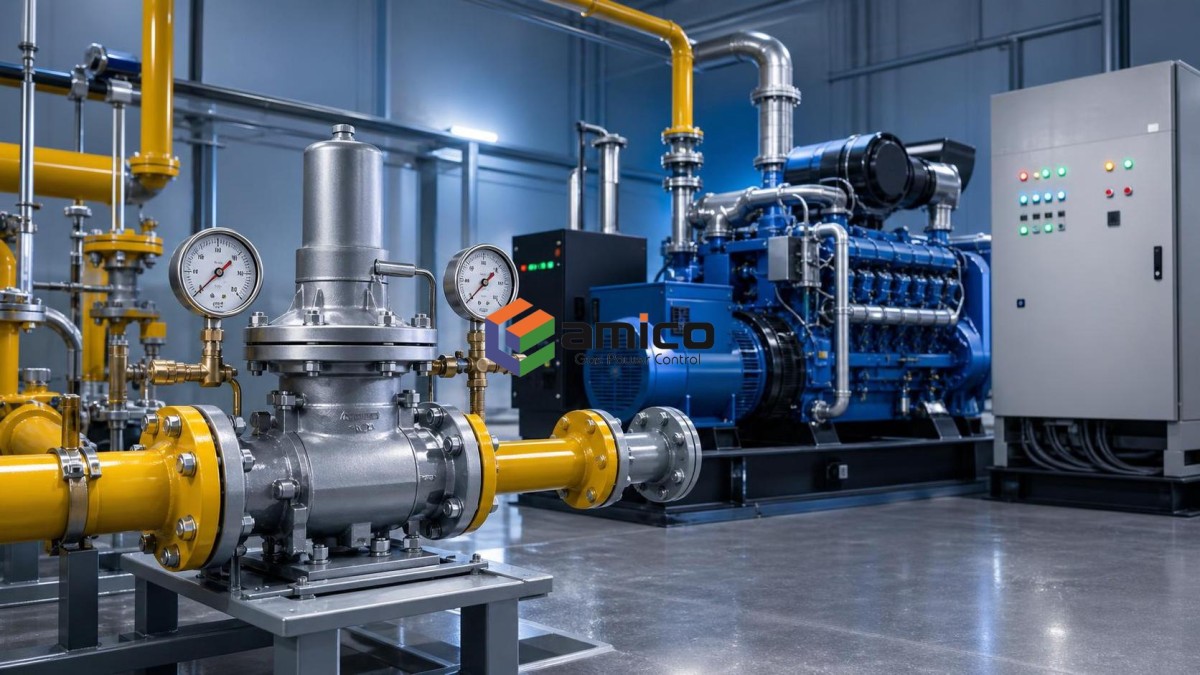
Do not judge it only at steady load
A continuous power system can look fine at one stable operating point and still have a regulator problem. The weak point usually appears during transitions: start-up, step loading, unloading, or ambient temperature shifts. If you only check fuel pressure while the set is cruising at a constant output, you can miss the real fault.
Watch what happens when the engine takes load. Does downstream pressure recover smoothly, or dip and overshoot? Does the air-fuel control start chasing the setpoint? On natural gas systems, poor regulator response can affect combustion stability before anyone calls it a fuel supply issue.
Replace it when adjustment no longer holds
This is one of the clearest replacement triggers. Regulators do need correct setup, but they should not drift constantly after proper commissioning. If lock-up pressure, outlet pressure, or response stability cannot be kept within the operating window recommended by the equipment documentation, the part has stopped being dependable.
At that point, repeated tuning wastes time and can mask a worsening mechanical problem inside the regulator body, seat, spring, or diaphragm assembly. Whether you repair or replace depends on the design, spare parts availability, and the manufacturer's service guidance. In many continuous-duty applications, operators choose replacement because downtime risk matters more than squeezing a little more life out of one component.
Look at service hours, gas quality, and environment together
There is no honest universal replacement interval for every pressure regulator. Duty cycle matters. Gas cleanliness matters. Temperature cycling matters. A unit in a clean, stable fuel supply environment can age very differently from one exposed to condensate, dust, oil mist, vibration, or wide pressure variation.
This is where operators sometimes get misled. A regulator can look acceptable from the outside and still be affected internally by contamination or wear. If your site has had issues with dirty gas, moisture carryover, or inconsistent inlet pressure, shorten your inspection and replacement decision cycle. Use the regulator maker’s maintenance guidance where available, and if that document is missing, mark the interval as 【待核实】 rather than guessing.
Do not ignore what the rest of the fuel train is telling you
A regulator should never be judged in isolation. Check filters, shut-off valves, pressure sensing lines, gas quality treatment, and instrumentation before declaring the regulator bad. A clogged filter can mimic regulator failure. A bad gauge can send you in the wrong direction. So can a sticking actuator elsewhere in the control train.
That said, once upstream issues are ruled out, do not keep blaming the system around it. Operators lose time when every instability gets labeled “fuel fluctuation” without confirming whether the regulator is still doing its job.
On packaged gas generator systems, especially medium and larger sets, fuel pressure stability becomes more important as you push for continuous, efficient operation. For example, a unit such as the 500kW natural gas generator set depends on steady gas delivery to support reliable 50Hz output and proper combustion behavior. In that kind of setup, replacing a questionable regulator earlier is usually cheaper than chasing repeated instability events.
Replace before a planned outage becomes an unplanned stop
This is the part many sites get wrong. They wait until failure is obvious. But in continuous power work, replacement timing should be tied to operating risk, not just part condition. If you already see unstable regulation and you have a scheduled maintenance window coming up, that is often the right time to change the regulator, verify settings, and pressure-test the section properly.
A regulator is not an expensive lesson compared with a forced shutdown, poor power quality, or a no-start event during a critical demand period.
Before replacement, verify these points
- Match pressure range, flow capacity, connection type, and gas compatibility to the existing system design.
- Confirm whether the original regulator has a service kit option or requires full replacement.
- Check lock-up behavior, venting requirements, and installation orientation against the manufacturer’s documents.
- Inspect nearby piping and supports. Vibration or pipe strain can shorten regulator life.
- After installation, test at start-up and under load transitions, not just at idle or no-load conditions.
If your operation uses integrated gas power equipment from suppliers with in-house control and generator development capability, the replacement decision is easier when the fuel control logic, engine behavior, and generator requirements are considered together. That is the practical advantage of working with a manufacturer familiar with gas power control technologies rather than treating the regulator as a generic pipe fitting.
The short version: replace the pressure regulator when it stops holding a stable setpoint, starts needing repeated adjustment, shows leakage or physical deterioration, or can no longer respond cleanly during real operating changes. If you wait for complete failure, you are usually late. In continuous power systems, early replacement is often the more disciplined operating choice.

Contact Us
Please use the form below to contact us.
If you require a response, we will contact you as soon as possible.