


How to troubleshoot gas generator sets after a sudden pressure drop
A sudden pressure drop during operation can make a gas-fired unit hunt for speed, lose load, alarm on fuel pressure, misfire, or shut down. On a running generator, the immediate priority is not to keep forcing output from the set. Reduce load if the operating procedure permits, stabilize the unit, and determine whether the lost pressure is on the fuel-supply side, within the gas train, or only a faulty signal reaching the controller.
For Gas Generator Sets, the most useful first distinction is this: is the actual gas pressure low, or is the control system reporting a low value that does not match the mechanical condition? Confirming that point with a calibrated local gauge or an independent test instrument prevents operators from replacing regulators, filters, or sensors unnecessarily. If pressure is genuinely below the engine’s permitted inlet range, follow the fuel path upstream before attempting a restart.
Make the situation safe before troubleshooting
A rapid pressure reduction can alter the air-fuel ratio quickly. Lean-burn engines may experience unstable combustion when fuel delivery falls away, while repeated start attempts can introduce unburned gas into the exhaust system. Follow the site shutdown and isolation procedure when alarms, gas odor, abnormal exhaust noise, vibration, or repeated misfire are present.
- Record the alarm code, engine load, speed, gas pressure reading, and time of the event before resetting anything.
- Do not bypass low-pressure switches, gas shutoff valves, ventilation interlocks, or controller protections to keep the generator online.
- Check the area for gas odor and listen for an obvious leak only from a safe distance. Use approved gas-detection methods for leak confirmation; never use an open flame.
- Allow qualified personnel to work on pressurized gas piping, regulators, valve assemblies, and electrical signal circuits.
The operating record matters. A pressure loss that occurred at a fixed electrical load points in a different direction from one that happened just after a large load step, during cold weather, or after a fuel-source change. A single low-pressure alarm may be a sensor problem; a downward trend visible over several operating hours is more likely to involve restriction, supply capacity, or regulator performance.
Start at the generator inlet, then work upstream
Do not begin by adjusting a regulator. First compare the inlet reading with the normal pressure specified for the engine and gas train. Then inspect the pressure at several points, where safely accessible: upstream of the main manual valve, before and after the filter, upstream of the regulator, and downstream of the regulator. The location where the pressure changes sharply is usually where the investigation should focus.
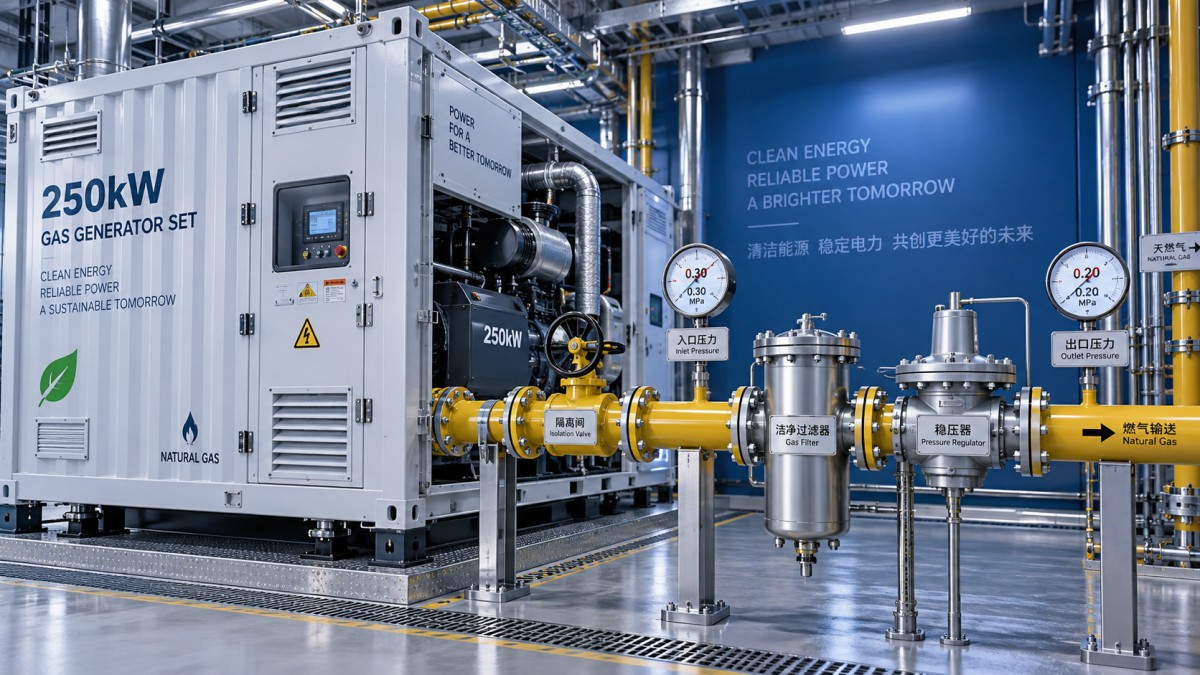
When pressure is low before the generator gas train
If the pressure is already low at the inlet isolation valve, the fault is likely outside the genset package. Confirm that upstream valves are fully open and that any supply regulator has not tripped, iced, or been set incorrectly. A partially closed valve can pass enough gas for no-load running but fail when engine demand increases. The same pattern can occur when an upstream fuel system was sized for a lighter duty cycle and cannot maintain flow at higher electrical output.
Ask whether another gas consumer started near the time of the event. Shared pipelines, heaters, process burners, and additional engines may reduce available pressure even though no component on the generator itself has failed. Where the site supply includes filtration, dehydration, compression, vaporization, or pressure-reduction stages, their operating status should also be checked by the responsible personnel.
When pressure falls across a filter, valve, or pipe section
A large pressure difference across a filter suggests blockage or excessive flow resistance. Filter elements can accumulate particulate matter, oil carryover, condensate-related debris, or material released during pipeline work. Check the differential-pressure indication where fitted and service the element according to the equipment procedure. Do not simply remove a filter element and continue operating; downstream gas-control parts need protection from contamination.
Condensate is another frequent restriction. Low points in piping, drip legs, and sediment traps can collect liquid, particularly when gas temperature changes or supply conditions vary. Drain only through the approved, isolated process. Also inspect pipe supports and flexible connections. A crushed hose, damaged flex section, or improperly routed replacement line can create a restriction that is not obvious from outside the enclosure.
Check whether the regulator can hold pressure under load
A regulator may show an acceptable outlet pressure at idle yet fail as gas demand rises. Bring this possibility into the diagnosis when the pressure is stable at no load but drops whenever the generator accepts load. Observe the inlet and outlet pressures while load is increased in controlled steps, within the operating procedure. A falling inlet pressure indicates an upstream supply or restriction issue. A stable inlet combined with a falling regulator outlet suggests regulator capacity, adjustment, sensing-line, diaphragm, or valve-seat concerns.
Regulator adjustment is not a cure for insufficient supply pressure. Raising a setpoint without identifying the reason for the loss can mask a restriction, move operation outside approved limits, or cause unstable fueling later. Inspect the regulator vent and impulse arrangement as well. A blocked vent, damaged diaphragm, loose sensing connection, or contamination in the regulator can prevent it from responding correctly.
Separate a fuel-pressure fault from a measurement fault
When a mechanical gauge remains steady but the display value jumps, drops to zero briefly, or changes with vibration, examine the sensing circuit. Look for loose terminals, water ingress, damaged cable insulation, poor grounding, and connectors that were disturbed during maintenance. Confirm that the sensor supply voltage and signal value match the controller’s configured range. A transmitter with the wrong scaling can report a pressure fault even though the gas train is healthy.
Pressure switches deserve separate attention. Their setpoints may differ from the value used by the analog sensor for display. Verify which device generated the shutdown and whether its trip setting agrees with the approved operating documentation. Do not alter protective setpoints as a troubleshooting shortcut. A switch that has cycled repeatedly near its threshold may need inspection or replacement rather than readjustment.
Look at engine behavior for supporting evidence
Fuel-pressure loss rarely appears alone. Engine data can show whether the event caused a real combustion problem. Watch for changes in fuel-valve command, throttle position, oxygen feedback, misfire indication, exhaust temperature spread, manifold pressure, and speed stability. A controller commanding more fuel while measured pressure continues to decline supports a supply-side problem. A normal fuel command with a sudden implausible pressure signal points more strongly toward instrumentation or wiring.
On equipment using lean-burn closed-loop control, avoid manually overriding the fuel strategy unless the approved commissioning or service process specifically calls for it. The control system is balancing fuel delivery against air flow and feedback signals; changing one setting can obscure the original fault. This is especially relevant after filter service, regulator replacement, or any work that may introduce air into the gas line.
Restore operation in a controlled sequence
Once the cause has been corrected, inspect all disturbed connections, confirm that isolation valves are in their intended positions, and perform required leak checks. Clear alarms only after the underlying condition is resolved. Restart according to the unit procedure, allowing pressure and engine parameters to stabilize at no load before accepting load gradually. Monitor pressure both immediately after startup and through the first load increase, because restrictions and marginal regulator capacity often become visible only when fuel flow rises.
For installations that need automated operation, a containerized package with electronic speed control and lean-burn closed-loop fuel management can help operators observe pressure-related behavior alongside engine control data. The 250kW Containerized Gas Genset is configured for 250 kW output, 50 Hz operation, DC24V electric starting, and one-key automatic operating functions. These features do not replace fuel-system inspection, but they support a repeatable startup and monitoring sequence after a pressure-related shutdown.
Prevent the next pressure-drop event
Build pressure checks into routine operating rounds rather than waiting for a trip. Compare normal inlet and regulated pressure at similar loads, inspect filters and condensate traps on schedule, and keep a record of regulator service and sensor calibration. After any changes to the gas source, pipeline, major consuming equipment, or load profile, confirm that the available pressure and flow remain suitable for the generator’s operating range.
Repeated alarms, unexplained gas odor, pressure oscillation, regulator venting, or a pressure drop that returns after filter service should be escalated for technical inspection. Those symptoms can indicate a fault that is not safe to resolve through routine operator adjustments alone.

Contact Us
Please use the form below to contact us.
If you require a response, we will contact you as soon as possible.